














Catching up with Noah Wetzel and His Eclipse Outlaw Chase
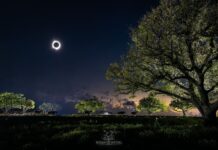
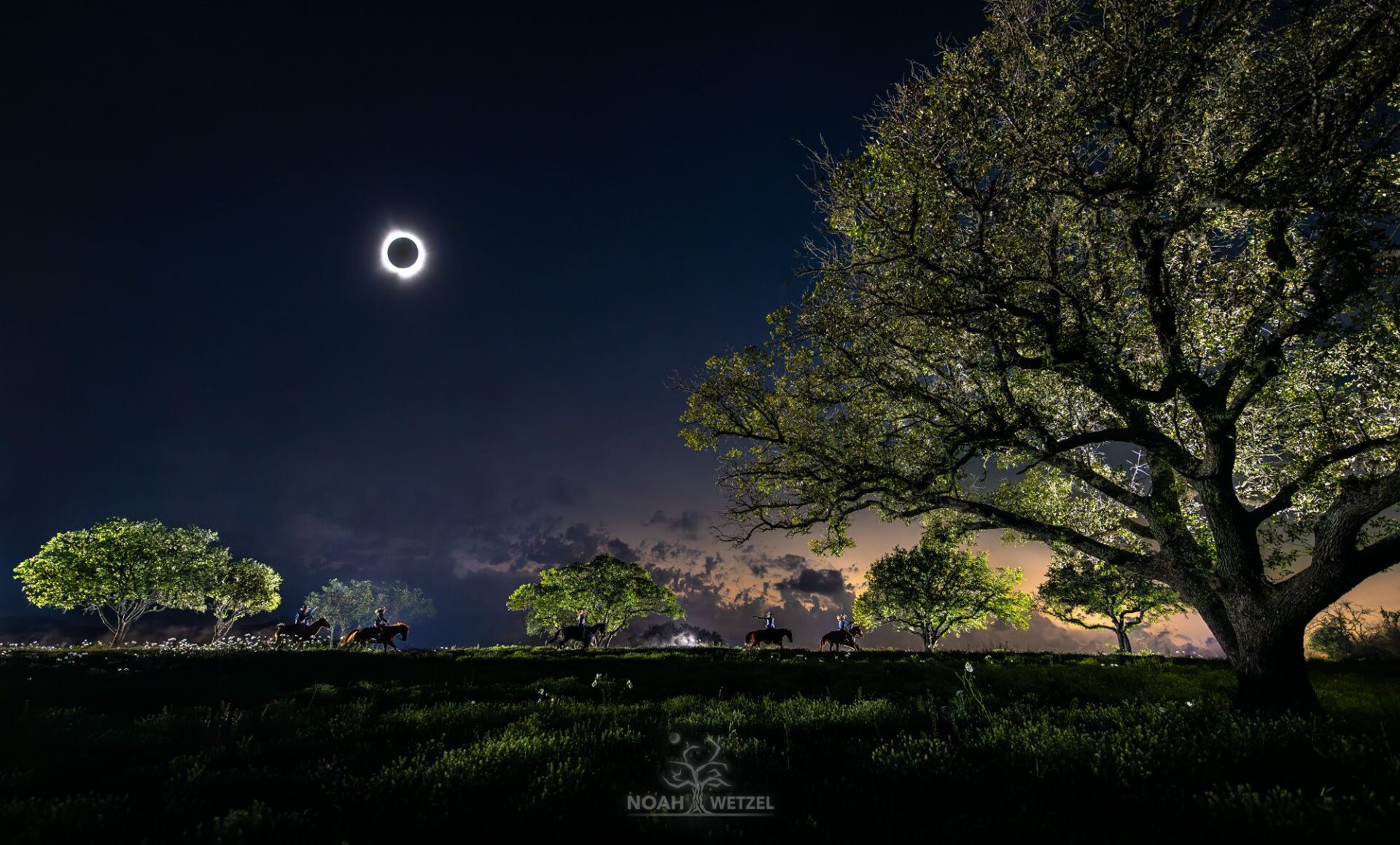
On April 8, 2024, darkness struck Texas at 1:34 p.m., the moon blocking 100 percent of sunlight for 4 minutes and 23 seconds of totality. For local photographer Noah David Wetzel who spent 250 hours to capture a singular image, the result was Eclipse Outlaw Chase, a western outlaw chase scene featuring five horseback riders riding full-gallop beneath the eclipse, the first to grace Texas’s hill country since 1878. From conceptualizing the idea to finding five willing riders, traveling to Texas for multiple days of testing, and the final moment of totality allowing for just three single-frame attempts, the resulting photo captures an ethereal moment of the last total solar eclipse in America until 2044. And he even made a documentary film explaining it all. We caught up Wetzel for a little more backstory on the shot.
S&C: What do you like most about the shot?
Wetzel: I love how powerful and surreal the image is. It evokes emotion, wonder, and question. Even when I look at it, I’m reminded of how incredible and rare that moment was, combined with its unique concept.
S&C: How hard was it to put it all together?
Wetzel: Words can’t express how much effort this photograph took to capture—how much conceptualizing, researching, planning, scouting, testing, shooting, and communication was needed. The odds were stacked against me, with less than ten weeks to find horseback riders in Mexico, Texas, or Oklahoma, I thought it was laughable to even start. This project brought me to tears at many points throughout; I can’t express the pressure and doubt you have to overcome to pursue a photograph like this, traveling somewhere I’d never been and asking individuals I’ve never met to trust my vision and put in multiple days of work, working for free, without guarantee we’d even capture anything.
S&C: What was the most fun part?
Wetzel: Totality. There’s nothing like it. Ninety-nine percent doesn’t even compare to 100 percent eclipsed; you can’t even reference the experiences together. If you’re viewing a total solar eclipse, you must be in the path of totality; it simply doesn’t count otherwise.
S&C: What was the hardest part?
Wetzel: Every single aspect was unbelievably overwhelming and challenging; each and every single step was pretty brutal. One of the most difficult challenges on location was trying to figure out the placement of the wireless flashes behind the hillside. With the trees staggered in different areas and planes, along with the riders positioning, it was nearly impossible to position the flashes to properly light up the scene evenly while requiring them to communicate properly with my camera’s wireless flash transmitter. Even after one night of testing the flashes, and two nights of testing the flashes with the horses, I was still unsure the flashes would trigger during mid-day darkness and three attempts within four minutes and 23 seconds.
S&C: How many hours went into taking it and did you ever think it would be that involved?
Wetzel: This photo took 250-plus hours to capture, including conceptualizing, researching, planning, scouting, traveling, testing, and more. From the start I was immediately overwhelmed, knowing it would take everything I had in me to even come close to having an opportunity to capture the image at exactly 1:33 p.m. What I didn’t expect is the additional 600 hours it’s taken to finalize the documentary, and all the additional work to promote and show it.
S&C: Are you psyched how it turned out?
Wetzel: I’m extremely proud of how it turned out…when I actually give it thought, I’m just amazed I somehow was actually able to pull this off and capture what I had in mind. I can only imagine the sense of wonder and awe it must evoke in viewers.
S&C: How excited are you about the film?
Wetzel: This project, capturing the signature image, and producing the film, is simply the greatest accomplishment of my career and perhaps life. Not only capturing a photograph that was nearly impossible to create, and that many photographers couldn’t capture based on its complexities, but also singlehandedly producing a documentary that shares the adventure of these pursuits and tells the story of how magical total solar eclipses are. Goosebumps and tears are a common response from viewers of the documentary, and every time I watch it, I get to relive the experience. It’s incredible. (Watch trailer of his film behind the shot here: youtu.be/JARYcB3uICw)